Hire a Performance Marketing Specialist
Hire a Performance Marketing Specialist Who Turns Ad Spend Into Predictable Revenue
A performance marketing specialist orchestrates paid campaigns across Meta, Google, TikTok, LinkedIn, and emerging channels to drive measurable business outcomes. Unlike single-channel media buyers, they build unified attribution frameworks, allocate budgets dynamically based on real-time ROAS data, and architect full-funnel strategies that move prospects from first touch to closed deal. Whether you are scaling an ecommerce brand past seven figures or building a B2B pipeline, a performance marketing specialist ensures every dollar you spend is tracked, optimized, and accountable to revenue.
Also known as
Media Buyer·Paid Media Specialist·Digital Performance Marketer·Growth Media Buyer
What Does a Performance Marketing Specialist Do?
Performance marketing specialists own the entire paid media ecosystem for a business. Their day begins with cross-channel dashboards -- reviewing overnight performance across Meta, Google, TikTok, and LinkedIn campaigns simultaneously. They identify which channels are delivering against KPIs, shift budget in real time, and flag creative assets that are fatiguing. Unlike channel-specific specialists who optimize within a single platform, performance marketers think horizontally: they understand that a prospect who sees a TikTok ad, clicks a Google search result, and converts after a Meta retargeting sequence needs to be attributed correctly across all three touchpoints.
Their core responsibilities include designing full-funnel campaign architectures that map ad creative and targeting to each stage of the buyer journey. At the top of funnel, they run broad awareness campaigns optimized for reach and engagement. In the middle, they deploy consideration-stage content -- case studies, demos, comparison content -- to audiences who have shown intent signals. At the bottom, they build retargeting sequences with urgency-driven creative and landing pages tuned for conversion.
Beyond campaign execution, performance marketing specialists build the measurement infrastructure that makes optimization possible. They implement tracking pixels, server-side APIs, and conversion events across every channel. They design attribution models -- whether last-click, linear, time-decay, or custom data-driven -- that accurately reflect how customers actually convert. They build reporting dashboards that translate raw platform metrics into business-meaningful KPIs like customer acquisition cost, lifetime value ratios, and payback periods.
Budget allocation is where performance marketers deliver their highest-leverage impact. Rather than splitting budgets evenly or based on gut feel, they use historical performance data, incrementality tests, and marketing mix models to determine the optimal spend across channels. They know that the marginal return on the next dollar spent on Meta might be higher or lower than the same dollar on Google, and they reallocate accordingly -- often weekly or even daily during high-spend periods.
They also serve as the bridge between creative teams and data
Performance marketers translate conversion data into creative briefs: they know which hooks resonate with which audiences, which ad formats drive which outcomes, and which landing page layouts convert at each funnel stage. They run structured creative testing programs -- testing headlines, visuals, CTAs, and offers in a systematic framework rather than ad-hoc guessing.
Core Performance Marketing Specialist Skills
Full Funnel Strategy
CoreDesigning campaign architectures that map ad creative, targeting, and landing pages to every stage of the buyer journey -- from cold awareness through consideration to conversion and retention. This includes defining the right KPIs at each stage, building audience flows between stages, and ensuring creative messaging matches the prospect's level of awareness and intent.
Cross-Channel Campaign Management
CoreSimultaneously managing and optimizing campaigns across Meta, Google, TikTok, LinkedIn, and other platforms while maintaining a unified strategy. This goes beyond knowing each platform individually -- it requires understanding how channels interact, how to prevent audience overlap, and how to orchestrate sequential messaging across platforms.
Budget Allocation & Optimization
CoreDynamically distributing ad spend across channels, campaigns, and ad sets based on real-time performance data and marginal return analysis. Skilled budget allocators use incremental ROAS calculations, diminishing returns curves, and portfolio theory to maximize total business outcomes rather than optimizing each channel in isolation.
KPI Framework Design
CoreBuilding measurement frameworks that tie advertising activities to business outcomes. This includes defining primary KPIs (CAC, ROAS, LTV:CAC ratio), secondary metrics (CPM, CPC, CTR, CVR), and leading indicators that predict future performance. Strong KPI frameworks include both platform-reported metrics and back-end business data like revenue, retention, and profitability.
Audience Strategy
CoreDeveloping comprehensive audience strategies that span prospecting (lookalikes, interest-based, broad), retargeting (website visitors, video viewers, engagers), and retention (customer lists, upsell audiences). Expert audience strategists understand audience overlap, exclusion logic, frequency capping across platforms, and when to go broad versus narrow at each funnel stage.
Creative Direction
CoreTranslating performance data into actionable creative briefs and managing the creative testing lifecycle from concept through production to analysis. Performance-oriented creative direction means knowing which hooks, formats, and CTAs convert at each funnel stage, briefing designers and videographers with data-backed hypotheses, and building creative testing roadmaps.
Landing Page Optimization
CoreDesigning and testing landing pages that maximize conversion rates for paid traffic. This includes understanding message match (ensuring ad copy and landing page copy align), designing pages for different intent levels, running A/B tests on headlines, layouts, forms, and offers, and diagnosing drop-off points using heatmaps and session recordings.
Attribution Modeling
CoreImplementing and interpreting multi-touch attribution models that accurately credit conversions across channels and touchpoints. This includes understanding the limitations of platform-reported data, building cross-channel attribution systems, and using models like last-click, first-click, linear, time-decay, and data-driven attribution to make informed budget decisions.
Conversion Rate Optimization
CoreSystematically improving the percentage of ad clicks that result in desired actions through testing and optimizing every element of the conversion path. This covers ad-to-landing-page congruence, form design, checkout flow optimization, offer testing, and reducing friction points that cause prospects to abandon before converting.
Performance Reporting
CoreBuilding clear, actionable reports that communicate campaign performance to stakeholders at all levels. This means translating raw platform data into business narratives, building automated dashboards that surface insights proactively, and presenting data in a way that drives decision-making rather than just documenting activity.
Advanced Performance Marketing Specialist Skills
Incrementality Testing
AdvancedDesigning and executing controlled experiments (holdout tests, geo-lift studies, ghost ads) to measure the true incremental impact of advertising spend. Incrementality testing answers the question "would this conversion have happened without the ad?" -- a question that standard attribution models cannot answer definitively.
Marketing Mix Modeling
AdvancedUsing statistical regression models to understand how each marketing channel contributes to overall business outcomes. MMM accounts for external factors like seasonality, competitive activity, and economic conditions, and is particularly valuable for businesses with significant offline touchpoints or long sales cycles where digital attribution falls short.
Cohort & LTV Analysis
AdvancedAnalyzing customer cohorts by acquisition channel, campaign, and time period to understand long-term value differences. This skill enables performance marketers to optimize for LTV rather than just initial conversion, revealing which channels bring customers who retain longer, spend more, and generate higher margins over their lifetime.
Scaling Playbooks
AdvancedDocumented frameworks for scaling ad spend from $10K to $100K to $1M+ per month while maintaining efficiency. Scaling playbooks include audience expansion strategies, creative refresh cadences, new channel launch protocols, and diminishing returns thresholds that trigger strategic shifts rather than brute-force budget increases.
Creative Testing Frameworks
AdvancedStructured methodologies for testing creative elements at scale -- from concept-level tests (different value propositions, hooks, and angles) down to execution-level tests (colors, CTAs, thumbnails). Advanced creative testing uses statistical significance calculations, multi-armed bandit approaches, and systematic documentation of winners and losers.
Channel Diversification
AdvancedStrategically expanding into new advertising channels to reduce platform dependency risk and capture incremental audiences. This includes evaluating emerging platforms (Reddit, Pinterest, Snapchat, connected TV), running structured pilot programs, and building channel-specific playbooks for each new platform entered.
Advanced Retargeting
AdvancedBuilding sophisticated retargeting sequences that go beyond basic website visitor retargeting. Advanced retargeting includes sequential storytelling across platforms, dynamic product retargeting with cross-sell logic, engagement-based retargeting tiers, and decay-curve optimization that adjusts messaging and bid intensity based on recency.
Data Pipeline Management
AdvancedDesigning and maintaining data flows between advertising platforms, analytics tools, CRMs, and data warehouses. This includes server-side tracking implementation, offline conversion uploads, CRM data syncing for custom audience building, and ensuring data quality across the entire measurement stack.
Performance Marketing Specialist Tools & Platforms
Meta Ads Manager
PrimaryThe primary advertising platform for Facebook and Instagram campaigns, offering the most advanced audience targeting, creative formats, and optimization algorithms. Performance marketers use Meta Ads Manager for prospecting via lookalike audiences, retargeting via pixel data, and increasingly for Advantage+ shopping campaigns that automate audience selection.
Google Ads
PrimaryThe platform for search, display, shopping, YouTube, and Performance Max campaigns. Performance marketers use Google Ads to capture high-intent search demand, run shopping campaigns for ecommerce, and deploy Performance Max campaigns that span Google's entire inventory. Mastery includes understanding bid strategies, quality score optimization, and negative keyword management.
GA4
PrimaryGoogle Analytics 4 serves as the central analytics hub for measuring cross-channel website behavior and conversion paths. Performance marketers use GA4 for multi-channel attribution reporting, audience building for Google Ads, custom event tracking, and understanding the full user journey from first touch to conversion across all traffic sources.
Google Tag Manager
PrimaryThe tag management system for deploying and managing tracking codes, conversion pixels, and custom events across advertising platforms without engineering support. Performance marketers use GTM to implement cross-platform tracking, fire conversion events, build custom audience segments, and maintain clean data layers.
Looker Studio
PrimaryGoogle's reporting and visualization platform for building cross-channel performance dashboards. Performance marketers use Looker Studio to aggregate data from multiple ad platforms, blend it with GA4 and CRM data, and create automated reports that surface actionable insights for stakeholders at every level of the organization.
TikTok Ads Manager
OptionalThe advertising platform for TikTok, increasingly important for reaching younger demographics and driving ecommerce conversions. Performance marketers use TikTok Ads Manager for Spark Ads, in-feed video ads, and TikTok Shop campaigns, bringing the same data-driven optimization approach used on Meta and Google to the fastest-growing social platform.
LinkedIn Campaign Manager
OptionalThe B2B advertising platform offering unmatched professional targeting by job title, company, industry, and seniority. Performance marketers use LinkedIn for lead generation, content promotion to decision-makers, and ABM campaigns targeting specific company lists -- particularly valuable for high-ACV B2B sales cycles.
Shopify
OptionalThe leading ecommerce platform that performance marketers integrate with for product feed management, conversion tracking, and sales data. Understanding Shopify's analytics, product catalog structure, and checkout flow is essential for performance marketers managing ecommerce ad campaigns.
Hotjar
OptionalA behavior analytics tool providing heatmaps, session recordings, and surveys that help performance marketers understand why landing pages are or are not converting. Used alongside quantitative conversion data to diagnose UX issues, identify drop-off points, and generate hypotheses for A/B tests.
Mixpanel
OptionalA product analytics platform used for tracking user behavior beyond the initial conversion. Performance marketers use Mixpanel to analyze post-acquisition engagement, build cohort analyses by acquisition channel, and calculate LTV metrics that inform upstream campaign optimization.
Triple Whale
OptionalAn attribution and analytics platform built for ecommerce brands, providing server-side tracking, multi-touch attribution, and blended ROAS dashboards. Performance marketers use Triple Whale to get a more accurate picture of cross-channel performance than platform-reported metrics alone, especially post-iOS 14.5.
Who Needs a Performance Marketing Specialist?
Companies that spend more than $10,000 per month on paid advertising across two or more platforms need a performance marketing specialist. At this budget level, the complexity of managing multiple channels, tracking cross-platform attribution, and optimizing budget allocation exceeds what a single-channel specialist can handle effectively.
Ecommerce brands scaling past $1M in annual revenue are prime candidates. They typically run Meta ads for prospecting and retargeting, Google Shopping and Search for intent capture, and increasingly TikTok for younger demographics. Without a cross-channel strategist, these brands waste 20-40% of their ad spend on overlapping audiences, misattributed conversions, and underperforming channels that nobody is monitoring closely.
B2B SaaS companies with average contract values above $5,000 benefit enormously from performance marketing specialists because their sales cycles are longer and multi-touch. A prospect might click a LinkedIn thought leadership ad, visit the website via a branded Google search a week later, and finally convert after seeing a Meta retargeting ad with a case study. Without proper attribution and full-funnel orchestration, B2B companies often cut the channels that are actually driving pipeline because they only measure last-click.
DTC brands launching new products need performance marketers to design launch campaigns that coordinate awareness, consideration, and conversion across channels simultaneously. Agencies managing multiple client accounts hire performance marketers to oversee cross-channel strategy at the portfolio level. Startups with limited budgets actually need performance marketers most -- when every dollar counts, you cannot afford to waste money on channels that are not performing or creative that is not converting.
Companies transitioning from agency management to in-house media buying also need performance marketers to build the infrastructure, processes, and reporting that agencies previously handled. This transition typically saves 30-50% on management fees while improving performance through faster optimization cycles and deeper business context.
How to Evaluate a Performance Marketing Specialist
Evaluating a performance marketing specialist requires assessing both strategic thinking and tactical execution across multiple dimensions.
Start with attribution fluency. Ask them to explain the difference between last-click, first-click, linear, time-decay, and data-driven attribution models. Then ask which model they would recommend for your specific business and why. Strong candidates will not default to one model -- they will explain the tradeoffs and likely suggest a blended approach or recommend testing. Red flag: anyone who says "just use last-click" or cannot articulate why attribution modeling matters.
Test their budget allocation framework. Present a scenario: "You have $50,000/month to spend across Meta, Google, and TikTok. How do you decide how much goes to each channel?" Weak candidates will give a fixed split (e.g., "60/30/10"). Strong candidates will ask about your business model, current performance data, target audience, and sales cycle before answering. The best candidates will describe an iterative approach: start with a hypothesis-driven allocation, run for 2-4 weeks, measure incremental contribution of each channel, and reallocate based on data.
Evaluate their creative strategy thinking. Performance marketers who only talk about targeting and bidding are incomplete. Ask how they brief creative teams, how they structure creative tests, and how they decide when to kill an ad versus iterate on it. Look for systematic frameworks: testing one variable at a time, statistical significance thresholds, and documented learnings.
Assess their reporting and communication skills. Ask to see a sample performance report or walk through how they would report on a campaign. Strong performance marketers build reports around business KPIs (CAC, ROAS, LTV:CAC ratio, payback period) rather than vanity metrics (impressions, clicks, CTR). They should be able to translate technical data into business-meaningful insights for non-technical stakeholders.
Finally, probe their experience with scale. Managing $5,000/month is fundamentally different from managing $500,000/month. Ask about the largest budgets they have managed, how they handled scaling challenges (audience saturation, creative fatigue, diminishing returns), and what frameworks they used to maintain efficiency at scale. The best performance marketers have a documented scaling playbook with specific tactics for each growth phase.
Mistakes to Avoid When Hiring a Performance Marketing Specialist
Pattern failures we see across hundreds of performance marketing specialist engagements — and what to do instead.
Hiring on credentials instead of results
Certifications, agency names on a résumé, and tool fluency say nothing about whether a Performance Marketing Specialist can move a metric. Ask for specific accounts, the starting state, the ending state, and the specialist's exact contribution. If they can't quantify outcomes, they likely didn't drive them.
Skipping the industry-experience question
Performance Marketing Specialists who have worked in your industry compress the ramp from 90 days to 14. The patterns — buyer behavior, seasonality, channel mix, what creative wins — don't transfer across verticals as much as people assume. Always ask for at least one account in or adjacent to your industry.
Vague or absent success metrics
Hiring without defined success criteria is how 6-month engagements end with "we tried a bunch of stuff." Before signing, agree on 2-3 quantitative outcomes tied to your business (CPA at X, revenue lift of Y%, organic traffic to Z), the time window, and what failure looks like. Specialists who push back on this are signaling they don't want accountability.
Underweighting communication and async work habits
Even the best Performance Marketing Specialist fails if you can't reach them, get a status update, or read their thinking. Especially for remote engagements, test their async habits explicitly: how do they document work, how often do they update, how do they handle escalation when something breaks. Bad communicators don't get better under pressure.
Over-paying for senior talent on early-stage work, or under-paying for strategic work
Both extremes waste money. A senior Performance Marketing Specialist at $150/hr is a poor fit for tactical execution; a $25/hr generalist is a poor fit for setting up tracking, building attribution, or running diagnostics. Match the seniority of the hire to the actual problem — for most growing businesses, the sweet spot is a vetted mid-level specialist at managed-platform rates ($10–$16/hr through EverestX), not the cheapest or most senior option.
No replacement plan if the hire is the wrong fit
~25–30% of first-attempt marketing hires don't work out within 90 days. If your hiring process has no built-in path to replace without re-starting from scratch (re-recruiting, re-interviewing, re-onboarding), the cost of getting it wrong is 6-8 weeks of stalled execution. Build replacement into the engagement up-front, or hire through a platform that includes it by default.
Pricing Comparison
No upfront fees · no hiring fees · no platform fees — clients pay only for hours worked.
Full-time
$10–$12/hr
Mon–Fri, 8 hrs/day · 40 hrs/week
≈ $1,700–$2,100/mo
Part-time
$14–$16/hr
Mon–Fri, 4 hrs/day · 20 hrs/week
≈ $1,200–$1,400/mo
How that compares to freelancers and agencies
| Experience Level | Freelancer | Agency | EverestX |
|---|---|---|---|
Junior (1-2 years) | $40 - $60 $4,500 - $7,000 | $100 - $150 $8,000 - $15,000 | $10–$12/hr $1,700–$2,100/mo |
Mid-Level (3-5 years) | $60 - $85 $7,000 - $12,000 | $150 - $225 $15,000 - $30,000 | $10–$12/hr $1,700–$2,100/mo |
Senior (5-8 years) | $85 - $120 $12,000 - $18,000 | $225 - $350 $30,000 - $50,000 | $10–$12/hr $1,700–$2,100/mo |
Expert (8+ years) | $120 - $175 $18,000 - $25,000 | $350 - $500 $50,000 - $80,000 | $10–$12/hr $1,700–$2,100/mo |
EverestX rate is flat across experience levels — within the band, exact rate depends on the specific talent's background and skills. Part-time engagements available at $14–$16/hr (20 hrs/week).
Common Performance Marketing Specialist Challenges We Solve
Stop struggling with these pain points. Our vetted specialists deliver solutions from day one.
Problem
Budget Waste Across Channels
Without cross-channel visibility, companies frequently overspend on underperforming channels while underfunding high-performers. Marketing teams running Meta, Google, and TikTok in silos often discover they are paying to reach the same audience on multiple platforms without any incremental lift. One DTC brand we audited was spending $35,000/month on Meta prospecting that overlapped 60% with their Google Display audience -- effectively paying twice for the same eyeballs. Channel-specific specialists rarely catch these overlaps because they are incentivized to grow their own channel rather than optimize the whole portfolio.
Solution
A performance marketing specialist builds unified audience maps across platforms, implements cross-channel exclusion lists, and uses holdout testing to measure true incremental contribution of each channel. They allocate budget based on marginal ROAS rather than historical precedent, and they reallocate weekly based on diminishing returns analysis. Most businesses see a 15-30% reduction in wasted spend within the first 90 days of working with a cross-channel performance marketer.
Problem
Attribution Confusion
Every ad platform over-reports its conversions. Meta says it drove 500 sales, Google says it drove 400, TikTok claims 200 -- but your total sales were only 600. Without a unified attribution framework, you cannot make informed budget decisions. Many companies default to last-click attribution, which systematically undervalues top-of-funnel channels like TikTok and YouTube that initiate customer journeys but rarely get the last click. This leads to cutting the very channels that are feeding the funnel, causing performance to decline everywhere.
Solution
Performance marketing specialists implement multi-touch attribution models, server-side tracking, and platform-independent measurement tools. They set up holdout tests to validate platform-reported data against real business outcomes. They build blended ROAS dashboards that show the true picture rather than each platform's inflated self-reporting. For larger budgets, they implement marketing mix modeling to understand the full impact of each channel including offline and organic effects.
Problem
Creative Fatigue at Scale
Scaling ad spend requires a proportional increase in creative volume. Most brands produce 2-3 new ad creatives per month -- but at $100K+/month in spend, you need 15-20 new concepts per month to prevent audience saturation and frequency fatigue. Creative fatigue manifests as declining CTR, rising CPM, and increasing CPA -- often misdiagnosed as "the channel is not working anymore" when the real problem is creative exhaustion. Without a structured creative testing program, teams either burn through their creative pipeline too quickly or stick with stale ads too long.
Solution
A performance marketing specialist builds creative testing frameworks that systematically produce, test, and iterate on ad creative. They establish creative refresh cadences based on spend velocity and audience size, implement modular creative systems (swappable hooks, bodies, and CTAs), and use performance data to brief creative teams on what to produce next. They track creative win rates and build libraries of proven hooks, angles, and formats.
Problem
Scaling Plateaus
Every paid media channel has a natural efficiency ceiling -- the point where increasing spend yields diminishing returns. Companies that have optimized a single channel to its maximum frequently hit a wall where they cannot grow further without increasing CPA unacceptably. This is especially common for brands that built their business on Meta ads and now struggle to grow beyond $200K-$300K/month without ROAS declining from 3x to 1.5x. Single-channel specialists rarely have the skills to diagnose or solve this because the solution lies outside their platform.
Solution
Performance marketing specialists solve scaling plateaus through channel diversification, audience expansion, and funnel architecture redesign. They identify which new channels offer incremental audiences, design structured pilots to test new platforms, and build channel-specific playbooks as each new platform matures. They also look beyond new channels: scaling can come from improving conversion rates, expanding to new geos, or building referral and organic loops that reduce paid media dependency.
Problem
Single-Channel Dependency
Companies that drive 70%+ of revenue from a single ad platform face existential risk. Meta's iOS 14.5 update decimated businesses that relied solely on Facebook ads. Google's broad match changes have repeatedly shifted CPCs. TikTok faces ongoing regulatory uncertainty. Yet many companies remain over-indexed on one platform because diversifying requires skills their current team does not have. When that platform's algorithm changes or costs spike, the business has no backup plan.
Solution
A performance marketing specialist systematically reduces platform dependency by building presence across 3-4 channels. They establish minimum viable spend on secondary channels, develop channel-specific creative and targeting strategies, and build attribution that properly credits each platform. The goal is not to spread budget thinly everywhere but to build genuine competence on 3-4 platforms so that a disruption to any single channel reduces revenue by 20-30% rather than 70-80%.
Problem
Reporting Without Insight
Most companies receive weekly or monthly reports that show metrics -- impressions, clicks, conversions, spend -- without context or actionable recommendations. Reports pile up in inboxes unread because they do not tell stakeholders what to do differently. Marketing leaders cannot connect ad spend to pipeline or revenue, finance teams cannot forecast ad costs accurately, and executives make budget decisions based on incomplete information. The problem is not a lack of data; it is a lack of synthesis.
Solution
Performance marketing specialists build reporting frameworks that lead with insights and end with recommendations. Instead of "CPA increased 15% this week," they report "CPA increased 15% due to creative fatigue on our top 3 ads -- we are launching 5 new concepts this week targeting the same audience with fresh angles, which historically recovers CPA within 10 days." They build dashboards that automatically flag anomalies, tie ad metrics to business revenue, and provide forecasting models.
Performance Marketing Specialist vs Agency: Quick Comparison
Should you hire a dedicated Performance Marketing Specialist or outsource to an agency? Here is how the two approaches compare across the dimensions that matter most. For a deeper analysis, read our full Performance Marketing Specialist vs agency comparison.
Detailed Comparison
See how EverestX stacks up against hiring a freelancer or working with an agency.
| Dimension | Freelancer | Agency | EverestX |
|---|---|---|---|
Monthly Cost (Mid-Level) | $5,500 - $9,000 | $15,000 - $30,000 | $1,700–$2,100/mo full-time · $1,200–$1,400/mo part-time |
Dedicated Hours Per Week | 30 - 40 hours | 10 - 20 hours | 30 - 40 hours |
Strategist Attention | 100% focused on your account | Split across 10-30 clients | 100% focused on your account |
Response Time | Same day, often within hours | 1-3 business days typical | Same day, often within hours |
Creative Production | Strategy and direction only | Full creative team included | Strategy and direction; creative add-on available |
Contract Terms | Monthly, flexible hours | 6-12 month contracts typical | Monthly, no long-term commitment |
Reporting Transparency | Full access to all accounts and data | Monthly reports, limited real-time access | Full access plus detailed time tracking |
Scaling Flexibility | Adjust hours weekly | Renegotiate contract terms | Adjust hours weekly, add specialists on demand |
How EverestX Works
A streamlined process to get you from requirement to results in days, not months.
Tell Us What You Need
Submit your role requirements, budget, and timeline. Our team reviews every request to understand your exact needs.
Get Matched in 48 Hours
We match you with pre-vetted specialists from our talent pool. Review profiles, skills, and availability before deciding.
Start Working Together
Your specialist is onboarded with managed support. We handle contracts, payments, and ongoing quality assurance.
Performance Marketing Specialist Hiring FAQs
What is the difference between a performance marketing specialist and a media buyer?
A media buyer typically focuses on one or two platforms and optimizes campaigns within those channels. A performance marketing specialist operates at a higher strategic level: they manage the full cross-channel ecosystem, make budget allocation decisions between platforms, build attribution frameworks, and design full-funnel strategies. Think of a media buyer as the specialist who drives one car expertly, and a performance marketer as the fleet manager who decides which cars to deploy on which routes. Most growing businesses need both: channel-specific expertise for deep optimization within each platform, and a performance marketer to orchestrate the overall strategy.
How much ad spend should I manage before hiring a performance marketing specialist?
The typical threshold is $15,000-$25,000 per month in total ad spend across at least two channels. Below this, a single-channel specialist is usually more cost-effective. Above $50,000/month, a performance marketing specialist becomes essential -- the complexity of managing multiple channels, the budget at risk from poor allocation, and the opportunity cost of misattribution make cross-channel orchestration a high-ROI investment. At $100K+/month, companies often pair a performance marketer with channel-specific specialists for each major platform.
Can a performance marketing specialist also create ad creative?
Performance marketing specialists direct creative strategy but typically do not produce creative assets themselves. They know what types of creative perform at each funnel stage, how to structure creative tests, and how to brief designers and videographers with data-backed hypotheses. Some performance marketers can create basic static ads or edit video in tools like Canva or CapCut, but their highest-value contribution is creative direction -- telling the creative team what to make based on performance data, not making it themselves. For best results, pair a performance marketer with a dedicated creative specialist or UGC creator.
How do performance marketing specialists handle attribution across channels?
They use a layered approach. First, they implement platform-native tracking (Meta Pixel, Google Tag, TikTok Pixel) with server-side event APIs to maximize data accuracy post-iOS 14.5. Second, they set up a platform-independent analytics layer (GA4 or a dedicated attribution tool like Triple Whale or Northbeam) that provides a single source of truth across channels. Third, they run periodic incrementality tests -- holdout experiments that measure the true causal impact of each channel. Fourth, for larger spenders, they may implement marketing mix modeling to account for factors that digital attribution misses, like offline conversions and brand effects.
What KPIs should a performance marketing specialist track?
The KPI framework should cascade from business metrics down to platform metrics. Top-tier KPIs: revenue, customer acquisition cost (CAC), LTV:CAC ratio, blended ROAS, and payback period. Second-tier: channel-specific ROAS, cost per lead/purchase, conversion rate by funnel stage, and contribution margin after ad costs. Third-tier (diagnostic): CPM, CPC, CTR, frequency, ad recall lift, and landing page conversion rate. A strong performance marketer will customize this framework to your business model -- subscription businesses focus heavily on payback period and retention, ecommerce on blended ROAS and AOV, and B2B on pipeline value and opportunity creation rate.
How quickly should I expect results from a performance marketing specialist?
The first 2-4 weeks are typically focused on auditing existing campaigns, implementing tracking, and establishing baseline metrics. Quick wins -- eliminating wasted spend, fixing tracking gaps, consolidating campaigns -- often show impact within weeks 2-4. Meaningful optimization typically shows results in weeks 4-8 as the specialist has enough data to make informed budget allocation decisions. Full-funnel impact, including new channel launches and creative testing programs, usually matures over 3-6 months. Be wary of anyone who promises dramatic results in the first two weeks -- they are either finding low-hanging fruit (which runs out) or manipulating metrics.
Should I hire one performance marketing specialist or separate specialists for each platform?
It depends on your budget and complexity. Under $50K/month in total ad spend, one strong performance marketing specialist can typically manage all channels effectively. Between $50K-$200K/month, consider a performance marketer as the strategist with one channel specialist (usually for your largest-spend platform). Above $200K/month, the ideal structure is a performance marketer leading strategy and budget allocation with dedicated specialists for each major channel. The performance marketer acts as the "general" while channel specialists are the "officers" executing within their domains.
How do performance marketing specialists handle creative testing?
They use structured testing frameworks with clear hierarchies. Level 1 (concept testing): testing fundamentally different creative angles, value propositions, and hooks to identify which messages resonate. Level 2 (execution testing): taking winning concepts and testing variations of visuals, formats, and presenters. Level 3 (element testing): optimizing specific elements like headlines, CTAs, colors, and thumbnails. Each test runs until statistical significance (typically 95% confidence for major decisions, 80% for directional guidance). Results are documented in a creative insights library that accumulates institutional knowledge over time. Most performance marketers aim to launch 3-5 concept tests per week at scale.
What is the biggest mistake companies make with their paid media strategy?
Optimizing channels in isolation. The most common mistake is treating Meta ads, Google ads, and other channels as separate P&Ls with separate teams and separate goals. This leads to duplicated audiences, conflicting attribution claims, inconsistent messaging, and suboptimal budget allocation. The second biggest mistake is chasing ROAS at the expense of growth -- companies that refuse to invest in top-of-funnel awareness because it has a lower measured ROAS eventually exhaust their retargeting audiences and hit a growth ceiling. A performance marketing specialist prevents both mistakes by building a unified strategy where channels work together.
How do I know if my performance marketing specialist is doing a good job?
Evaluate on three dimensions. First, efficiency metrics: Is blended CAC trending down or stable while spend increases? Is LTV:CAC ratio above 3:1? Is wasted spend being eliminated? Second, strategic impact: Are they diversifying channel mix to reduce platform dependency? Are they building scalable creative testing programs? Is their attribution framework improving over time? Third, communication: Are you receiving actionable reports that tell you what is happening, why, and what they are doing about it? A great performance marketer makes you feel in control of your marketing spend, not confused by it. Red flags include lack of transparency, over-reliance on one channel, and inability to explain why performance changed.
More Ways to Get Performance Marketing Specialist Help
Different intents, different pages — same vetted talent network underneath.
Buy it as a service
Performance Marketing Specialist as a Managed Service
If you'd rather buy a service outcome than hire a person, see our performance marketing specialist done-for-you service page.
Learn moreCompare alternatives
Best Performance Marketing Specialist Agencies & Alternatives (2026)
Honest comparison of the top performance marketing specialist vendors — EverestX vs Toptal vs Upwork vs agencies.
Learn moreCost & Pricing
Top Cities
- Performance Marketing Specialist in New York
- Performance Marketing Specialist in Los Angeles
- Performance Marketing Specialist in Chicago
- Performance Marketing Specialist in Houston
- Performance Marketing Specialist in Austin
- Performance Marketing Specialist in San Francisco
- Performance Marketing Specialist in Seattle
- Performance Marketing Specialist in Denver
- Performance Marketing Specialist in Boston
- Performance Marketing Specialist in Miami
Industries
- Performance Marketing Specialist for E-commerce & DTC
- Performance Marketing Specialist for SaaS & Technology
- Performance Marketing Specialist for Healthcare & Medical
- Performance Marketing Specialist for Finance & Fintech
- Performance Marketing Specialist for Education & EdTech
- Performance Marketing Specialist for Real Estate
- Performance Marketing Specialist for Travel & Hospitality
- Performance Marketing Specialist for Agency & Consulting
- Performance Marketing Specialist for B2B Services
- Performance Marketing Specialist for Consumer Products & CPG
- Performance Marketing Specialist for Media & Entertainment
- Performance Marketing Specialist for Nonprofit & NGO
Related Roles
Real clients, real outcomes
Hear it from teams
we work with.
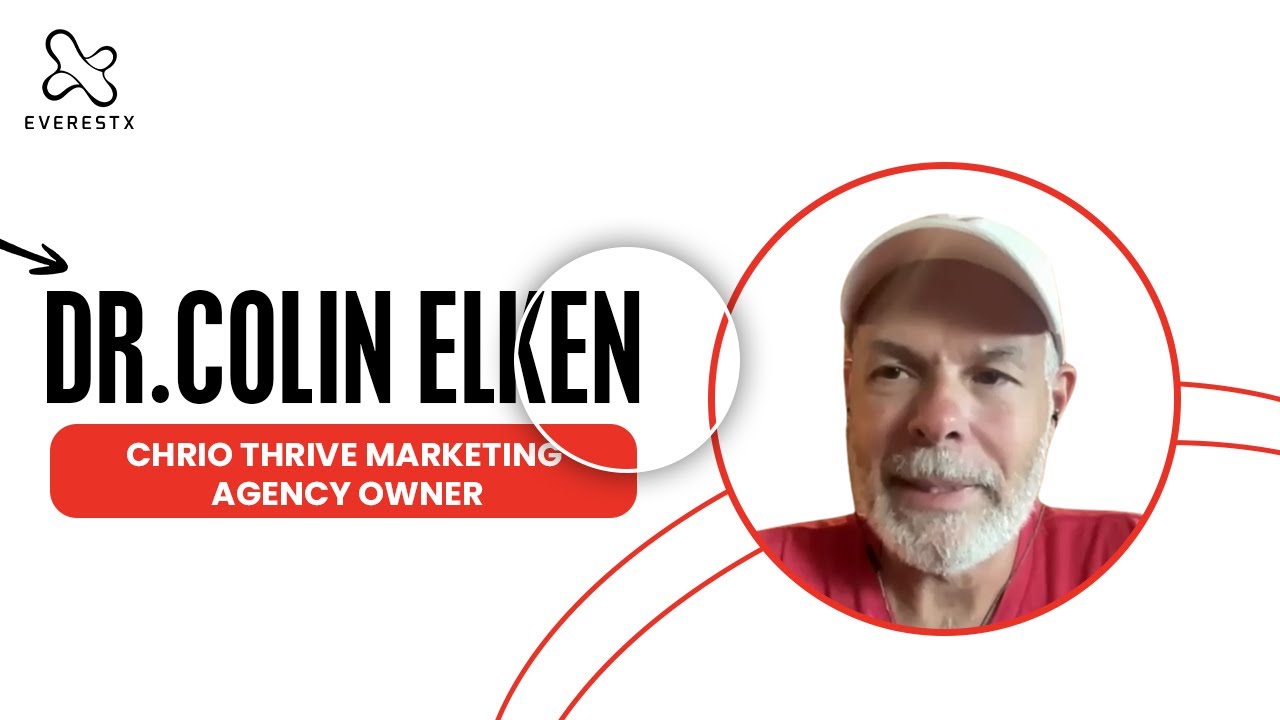
“He really acts as if he’s a part owner of the company. Owns up to mistakes right away, corrects them, and has done some wonderful work for us — frankly, helped us grow.”
Dr. Colin Elken
Agency Owner, Chirothrive Marketing Agency
Hired: Digital Marketing Specialist (Full-Time)
“He was a great team member with us for the last year. Definitely knows digital ads — very responsive and committed throughout.”
Jerry Martinez
President, Sunray Media Consultants
Hired: Performance Marketing Specialist (Full-Time)
“Saved us a ton of time on screening. The person they sent came in ready and picked up our stack fast — has been delivering consistently since week one.”
Rishi Patel
Senior Talent Operations Manager, RippleMatch
Hired: Paid Ads Specialist (Part-Time)
Tutorials
Want to do this yourself? Here is how
Free, step-by-step tutorials covering the tools this role works in. If at any point you would rather hand it off, our specialists are above.
Google Tag Manager
When to hire a Google Tag Manager specialist — an honest checklist
DIY GTM works fine for simple stacks. It starts breaking down when you need GA4 + Meta + TikTok + Google Ads all firing accurately with deduplication. Here's the honest framework for when to hire.
Google Analytics 4
When to hire a GA4 specialist — an honest checklist
DIY GA4 is a great idea — until it isn't. This is the honest framework: when the cost of unreliable data exceeds the cost of hiring help, and how to tell which side you're on.
Microsoft Ads
When should you test Microsoft Ads alongside Google Ads?
Microsoft Ads covers ~10% of US search but often delivers 30-50% cheaper CPCs and a more receptive B2B audience. The question isn't whether it works — it does — but whether it works for your account today.
Mixpanel
Mixpanel vs Amplitude: which product analytics tool to pick
Mixpanel and Amplitude are functionally equivalent for 80% of use cases. The remaining 20% is where the choice matters — and it's usually pricing, team comfort, and ecosystem fit, not features.
Ready to Hire a Performance Marketing Specialist?
Get matched with a vetted Performance Marketing Specialist in 48 hours. Try 1 week risk-free — no charge if not the right fit.
48-hour match guaranteed · Replacement at no cost · Cancel anytime